
The Pick, Stated Plainly
Golden State Valkyries over Atlanta Dream. That is the call, made before either team has actually clinched a Finals spot, because both are 1-0 in their semifinals and the prediction model favors both to win every remaining game of their respective series. This piece is not about who gets there. It is about why the data says the team that gets there from the West beats the team that gets there from the East.
The short version: these two teams already played a five-month-long preview of this exact Finals, and Golden State won every game of it.
The Full-Season Case, By Percentile
This is the whole 2026 regular season, not just the playoffs. Golden State's case is almost absurdly one-sided outside of shooting: a perfect 100th percentile in defense, net rating, and ball security.
Shape of a Potential Finals
Atlanta's hexagon is balanced and strong everywhere. Golden State's is more extreme: nearly maxed out on five axes, and genuinely weak on only one.
Form Entering the Playoffs
Both teams cooled in midsummer. Atlanta's closing kick (9-1 in its last 10) is the better recent form of the two, which is the single clearest fact working against this pick.
What the Prediction Model Actually Says
Staaty's basketball prediction model is not a vibes-based power ranking. It is graded, continuously, against real outcomes, and it is allowed to be wrong in public.
Tonight, specifically: the model gives Atlanta an 80.9% win probability over New York in Game 2, and Golden State a 91.3% win probability over Las Vegas. Both numbers track the same read the percentile data gives above. In Game 1 of each series, the model favored Atlanta by 8.8 and Golden State by 7.2. Final margins were 10 and 11. It was not just right about who. It was close on by how much.
Where the Model (and the Pick) Could Be Wrong
Golden State's one blemish this postseason is instructive: in Game 2 of the first round, the model gave them a 71.3% chance to beat Dallas, and Dallas won anyway, 108-100, by getting hot from the floor against a team that ranks 21st percentile in shooting itself. Golden State does not out-shoot opponents. It out-defends and out-rebounds them, and it is vulnerable on exactly the night the other team's shots start falling. Atlanta, at 50th percentile shooting, is a plausible enough offense to have that kind of night in a seven-game series, even if the model does not currently see it coming.
The model also missed twice on New York's upset of Minnesota, so it is not infallible about upsets generally. Atlanta beating Golden State in this hypothetical Finals would not be a freak outcome. It would just be the same category of surprise the model has already gotten wrong once this postseason.
Two Players Who Decide It


Reese is Atlanta's best counter to Golden State's defensive identity: a 12.0-rebound anchor against a Valkyries frontcourt that is excellent as a unit (79th percentile team rebounding) but has no single low-post stopper on the roster. If Atlanta is going to beat the matchup history, it likely starts with Reese winning extra possessions on the glass all series. Source
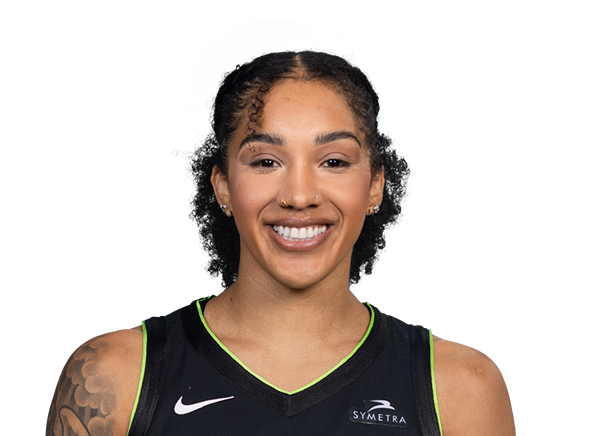

Williams fronts the actual reason Golden State is 3-0 against Atlanta: there is no single player to key a defensive gameplan on, and the bench behind her outscores most teams' starting units. That depth is harder to scheme against over a seven-game series than any one matchup Atlanta can win. Source
Staaty's Finals Pick
Golden State Valkyries, in a hard-fought series, not a sweep. The full season says Golden State is the better two-way team by a wide margin on everything except shooting. The head-to-head record this season says it even more plainly: three games, three Golden State wins, including one in Atlanta's own building. The model's season-long accuracy (70.1% in the regular season) says this specific kind of forecast, favorite over the field, has been a reasonably good bet to follow all year.
Atlanta's actual path to flipping this: get hot from the field in at least two games, the exact scenario that beat Golden State once already this postseason, and win the rebounding battle with Reese closer to 15 than 12. Possible. Just not where the data currently sits.
Method & Sources
Staaty data covers the full 2026 WNBA regular season and postseason through October 7, including all three Atlanta-Golden State regular-season meetings, team and player season averages, league-wide percentile ranks, and Staaty's basketball prediction model with its published accuracy and margin-error numbers. Percentiles are calculated among all 15 WNBA teams; defensive and turnover measures are inverted so a higher percentile is always better. This pick was made before either team had clinched its semifinal series; if the Finals matchup ends up different than projected here, that will be noted plainly in a follow-up, not quietly edited away.
Box-score and schedule references: WNBA.com/stats.